Newest Coin:
Click to see info on this coin!
By: double mike

21048 coins have been entered into the online coin database!

3529 prices have been entered into the online coin price guide!

There are 10534 photos of coins in the online coin database!

Random Coin:
Click to see info on this coin!
By: kaija


Friday 03 September 2010

 The Latin Monetary Union

Were you aware that the European Union was not the first organization in Europe that attempted to standardize coinage among countries?

The Latin Monetary Union is one of those organizations that attempted to unify European coinage into a single currency. The LMU was formed in 1865 and was around until 1927. Unlike the European Union, which created the Euro to circulate through all participating nations, the LMU required only that countries conform to the size and weight requirements of gold and silver coins.

France, Belgium, Italy, and Switzerland were the initial members of the LMU at it's inception in 1865. Spain and Greece join in 1868, followed by Romania, Bulgaria, Venezuela, Serbia, San Marino and the Papal States in 1889. In 1904, the Danish West Indies were also placed on this standard but did not join the Union itself.

The United States of America was also considering linking up with the LMU. The weights of it's coins were restructured so that for every $1 in face value, there would be 25 grams of 90% silver. A 20-cent piece was minted from 1875-1878 which would have been on par with the French Franc. The U.S. also created patterns for a $4 gold coin, called a stella, which would have been equal in value to 20 French Francs.

By the time of World War I (1914-1918) the LMU had been virtually phased out and by 1927 it was dissolved.
NicholasonFriday 03 September 2010 - 08:37:56
comment: 0

Monday 09 August 2010

 A New Search Mode

Braggers can now search using Checklist Easy Add Mode which enables you to add coins to your lists without having to go to each coin's page. Now, you can just click the have, want or trade buttons from the search to save time.

When the gallery search is ready, there will be similar links for easy adding as well.

As always, feedback on the changes are welcome!
NicholasonMonday 09 August 2010 - 00:42:05
comment: 0

 Delete Option For Coin Checklists Added

You can now remove coins from your have, want and trade lists. At the bottom of your have/want/trade lists is a link that says "(View coins I have removed)" which takes you to a page of your recently removed coins. Periodically, I will permanently delete those coins from the database.

I designed it like this so that if you accidentally remove the wrong coin from your list, you can go to the remove page and easily add it back to one of your lists. I thought this might be preferable to a confirmation box that would confirm deletions--if you want to delete multiple coins, a confirmation box would slow the process.

I still need to work on allowing everyone to add comments to their lists and I hope to have that working soon.
NicholasonMonday 09 August 2010 - 00:00:50
comment: 0

Friday 16 July 2010

 D Is For Penny? A Brief Look At Small Denomination Coins From The United Kingdom

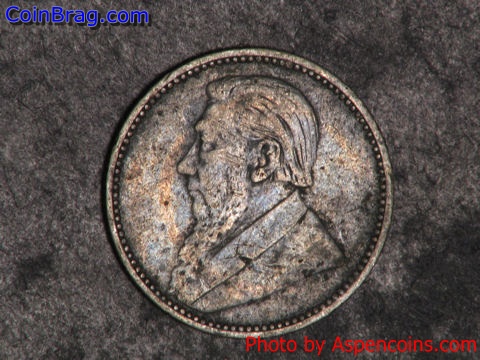
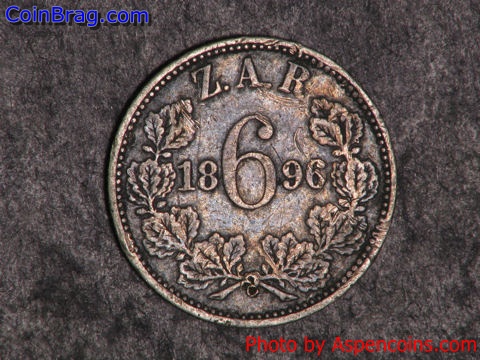
The other day I posed a question on the forum. I had just uploaded a coin from South Africa with a value of one penny, however, the coin showed the abbreviation as "1 D."

the culprit obversethe culprit reverse
After a little bit more research it turned out that "D" was actually for "denarius." The denarius was a roman coin, so why did Great Britain decide to use an abbreviation for denarius for their penny and pence coins?

Sap from the Queensland Numismatic Society was willing and able to shed some light on the subject:

"D" is the symbol for a predecimal British penny; it was used wherever the pounds-shillings-pence currency system was used. And yes, the "D" does ultimately derive from "denarius", the ancient Roman silver coin. The link between the two is obscure, but it goes something like this.

The denarius was the mainstay of the Roman economy for several hundred years, until around 200 AD when inflation and debasement began to make it worthless. With the collapse of the Roman Empire, western Europe was left without a unified, high-quality currency, or any centralised government to impose one. When the Franks had their new "Holy Roman Empire" proclaimed in 800 AD, they chose to introduce a new, fine silver coin, the best Europe had known since Roman times. They called it a "denier", French for "denarius". It was a statement, in line with the message the Franks were sending as a whole: the Roman Empire has been reborn. The weight of the new coin was 1/240th of a pound of fine silver, the ratio maintained by the later English and British pennies, at 240 to a pound.

The pre-Norman petty kings of England saw how well-accepted these newfangled deniers were, so they copied the French and began issuing pennies of their own. But French and Latin were still the languages of trade and commerce, so the merchants would use the Latin name, denarius, or the French name, denier, whenever they talked about or wrote down amounts of money. The shorthand for both "denier" and "denarius" is D.

Likewise the S in "£sd" doesn't really stand for "shilling"; it stands for the French "sou", or Latin "solidus". The solidus was a gold coin from the late Roman and early Byzantine period, and in 800 AD would have still been circulating throughout post-Roman Europe as a trade coin. The Franks set the exchange rate at 20 solidii for one pound of silver, or 1 solidus for 12 of their new deniers. As the supply of actual solidii coins dried up soon afterwards, the solidus devolved into a "money of account" - there were still 12 deniers to a sou, just no solidus coins circulating.

Thus the monetary system of 12 pennies to a shilling, 20 shillings to a pound was begun by the French, and later copied by the English. One legacy of this French origin is the symbolism: the usage of "D" rather than "P" as the symbol for the penny, as well as a deformed letter "L" for the pound sign (from French livre, Latin libra).

Of course, with decimalization in Britain in 1971, the old penny became obsolete. The new penny, worth 2.4 old pennies, has the symbol "p".


"With the collapse of the Roman Empire, western Europe was left without a unified, high-quality currency, or any centralised government to impose one." This statement here will be evaluated further in a future article I have been working on.

Thank you again to Sap for providing an informative and fun read!
NicholasonFriday 16 July 2010 - 09:49:05
comment: 1

Saturday 03 July 2010

 Coin of the Month July 2010: United States of America Half Dollar 1921 Alabama State Centennial Commemorative.

Region: North America
Country: United States of America
Denomination: 1/2 Dollar
Year: 1921
Pricing Info
Coin of the Month July 2010Coin of the Month July 2010


From the U.S. Mint:

Obverse Description: This coin is the first ever created by the Mint to carry a living person's portrait. The busts are of William Wyatt Bibb, the first governor of Alabama, and T.E. Kilby, governor at the time of the event. The 22 stars indicate that Alabama was the 22nd state admitted to the Union. The inscriptions include United States of America, Half Dollar, In God We Trust, and Bibb 1921 Kilby. Obverse Designer: Laura Gardin Fraser

Reverse Description: The image on the reverse of the coin is an adaptation of the State Seal of Alabama. The inscriptions say, State of Alabama, 1819 Centennial 1919, and the state motto, Here We Rest. Reverse Designer:Laura Gardin Fraser

These coins were first distributed on October 26, 1921 when President Warren Harding passed through Birmingham to help dedicate a new Masonic temple. They were then sold by banks throughout the state and were widely circulated during the Great Depression. The coin was minted exclusively at the Philadelphia mint and although 100,000 coins were authorized, only about 70,000 were actually minted. There is also a version of this coin with a "2X2" on the right side of the obverse, above the stars, The X represents St. Andrew's cross, which is depicted on Alabama's state flag. There is an estimate that 6,006 of these coins were minted with the "2x2" on the coin.

Stats:
Diameter: 30.6 millimeters
Weight: 12.5 grams
Composition: .900 silver, .100 copper (ASW: .36169 oz)
Edge: Reeded
NicholasonSaturday 03 July 2010 - 01:24:38
comment: 0

Go to page  [1] 2 3 ... 15 16 17

News Categories


 Coins from the Republic of India: A brief history
e107 LAN_NEWS_100 Monday 01 February 2010 - 03:17:12 | 2